Presentation to Withlacoochee Gulf Area Chamber of Commerce

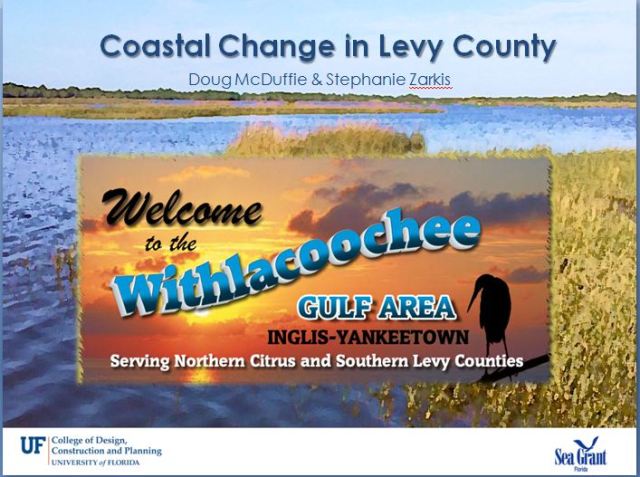
On November 14th, 2012, students from the UF coastal engagement studio, Doug McDuffie and Stephanie Zarkis presented past, current, and future trends of sea level rise to the Withlacoochee Gulf Area Chamber of Commerce. We would like to thank the Chamber for hosting the presentation and providing engaging conversation that will help inform the direction of the project. You can view the presentation that was given below.

Posted in Uncategorized | Leave a comment

Storm Surge

Increase in average sea level rise affects certain hydrologic processes such as storm surge. Storm surge is a coastal high water level caused by wind from storms. Many of us have become familiar with the effects of storm surge from the images and videos captured after Hurricane Sandy. Rising sea level can cause damage to coastal communities in Florida because it exacerbates storm surge generated by hurricanes. Buildings and critical infrastructure along the coast will be impacted by the flooding, higher waves, and faster flows associated with storm surge. The impacts of increased storm surge will most likely occur before other effects of sea level rise are seen. Utilizing the opportunity that exists to create adaptation strategies for infrastructure is imperative to mitigate impacts and preserve the cultural and economic vitality of coastal communities.

Below is an image of Cedar Key Fire Chief Robert Robinson walking on a section of a floating dock that broke loose during a storm surge from Tropical Storm Debby in Cedar Key, Fla., on Sunday, June 24, 2012.
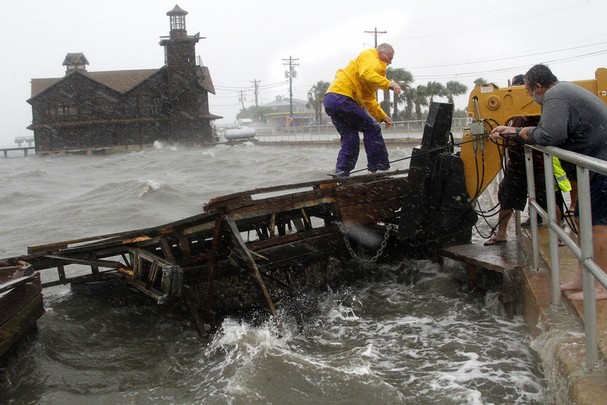
(Brad McClenney/The Gainesville Sun)

Posted in Uncategorized | Leave a comment

Habitat Migration

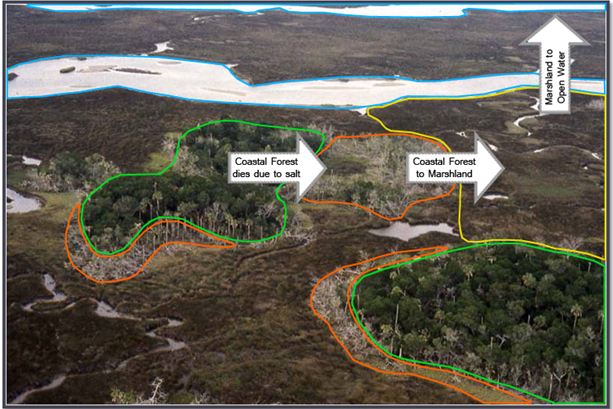
Related to sea level rise, another issue affecting coastal communities is ecosystem change. Habitat migration – the gradual replacement of one natural environment by another – is a key concern when planning for the future of Florida’s coastal communities. As the average sea level rises, salt water inundates fresh and brackish water systems, killing many plants and forcing some animals to relocate. When the speed of habitat migration outpaces the ability of natural areas to transition, major ecological problems can occur. Because Levy County is relatively flat and low-lying, habitat migration occurs even faster. Evidence of accelerates habitat migration is best seen on the coast. Illustrated below are the effects of habitat migration in Waccasassa Bay. As water advances inwards, elevated portions of land form ‘islands’ of trees – also known as coastal forest – while lower land turns into marsh. Over time, the coastal forests are overtaken by marsh and the marshland itself becomes open water. Planning for habitat migration is essential for the continued success of Florida’s Nature Coast estuaries. Maintaining as much coastal forest as possible helps protect against storm surge and flooding caused by storms. It also defends the sensitive habitats necessary for fish and wildlife growth – a major source of the regions income.

The video below highlights the the impacts of sea level rise on habitat migration in the Waccasassa Bay State Park.


Posted in Uncategorized | Leave a comment

Florida Sea Grant and Sea Level Rise

The video below is a 5-minute overview of currently observable impacts of sea level rise in Florida. The video narrator, Thomas Ruppert, is Florida Sea Grant’s statewide specialist in coastal planning, and his expertise lies in law, hazard mitigation, post-disaster recovery planning, and environmental protection. Mr. Ruppert stresses the need for proactive planning in order to adapt to the numerous, imminent consequences of sea level rise. The Florida Sea Grant program provides assistance to local governments to create the best coastal adaptation strategies and policies for their communities, including through funding our project in Levy County.

Posted in Uncategorized | Leave a comment

Saltwater Intrusion

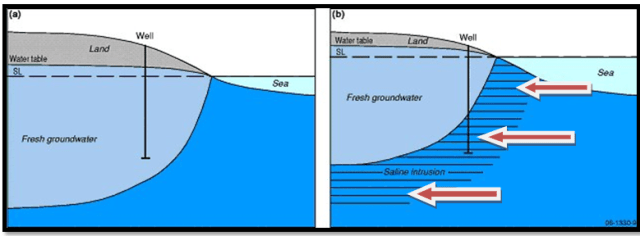
After engaging with many residents in Levy County it is apparent that there are a couple of concerns related to sea level rise that are consistently coming up. One of these concerns is saltwater intrusion and how it is related to sea level rise. Saltwater intrusion is the process by which coastal groundwater aquifers become contaminated by sea water, raising their salinity. It is caused by three primary processes: overdrafts of coastal wells, reduction in groundwater flows due to withdrawal elsewhere or drought, and sea level rise. As the sea level rises, the balance of fresh and salt water is shifted in favor of the salt water, allowing it to filter into the fresh water system. A higher sea level means saltwater may penetrate wells in low-lying communities. This could reduce the availability of freshwater for coastal communities.

Click on the illustration to learn more about saltwater intrusion.

Please visit the link below to find out how the island community of Cedar Key dealt with saltwater instrusion this past summer.

http://www.chronicleonline.com/content/cedar-key-wells-suffer-saltwater-intrusion

Posted in Uncategorized | Leave a comment

Cedar Key Seafood Festival

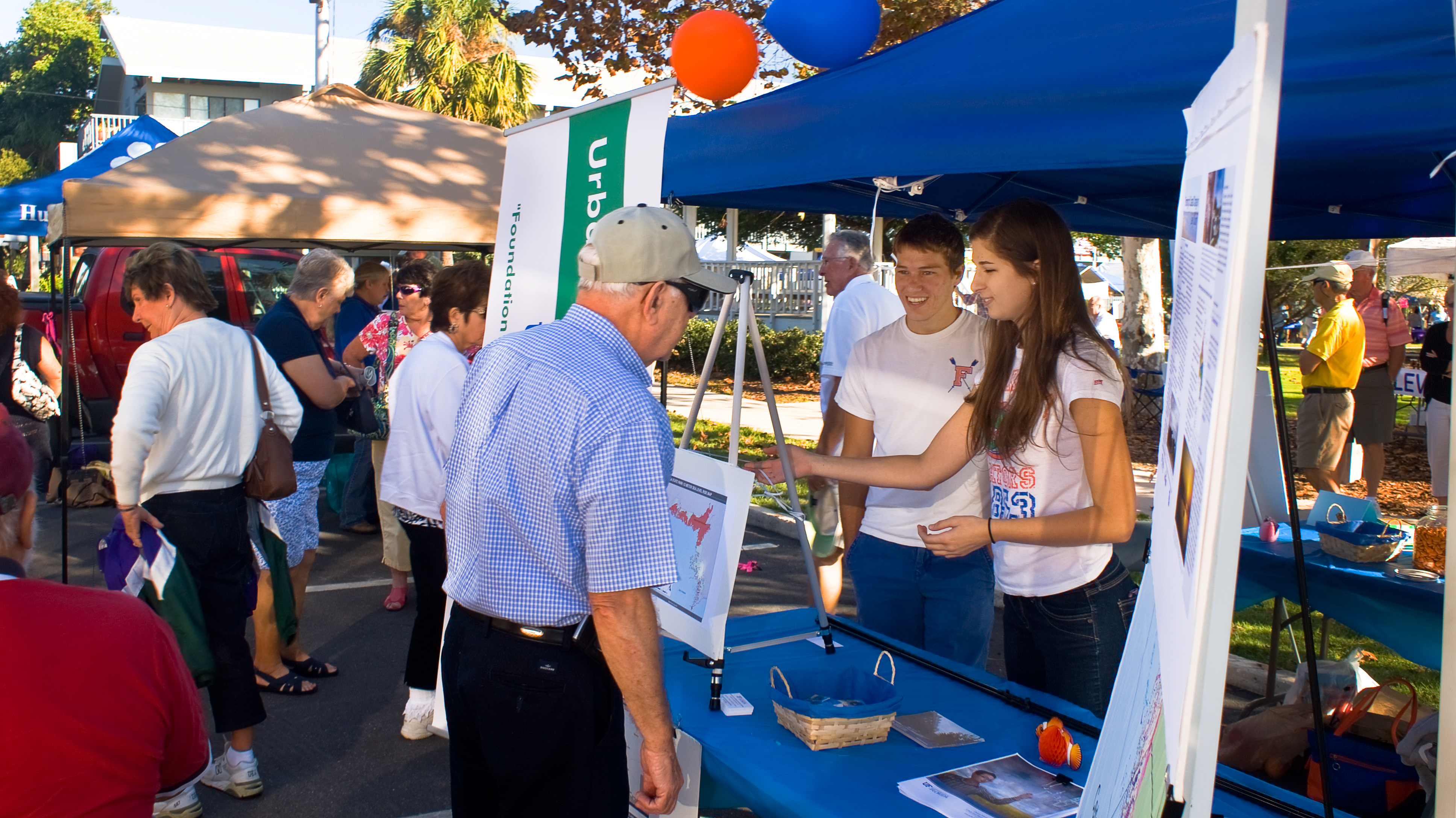
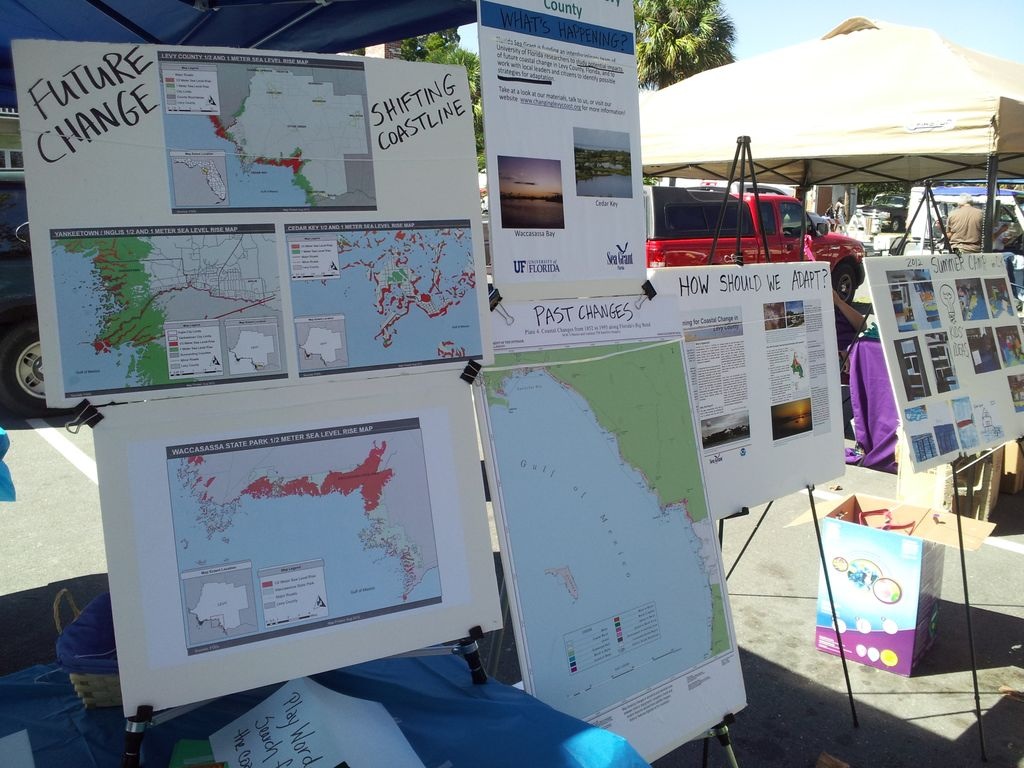
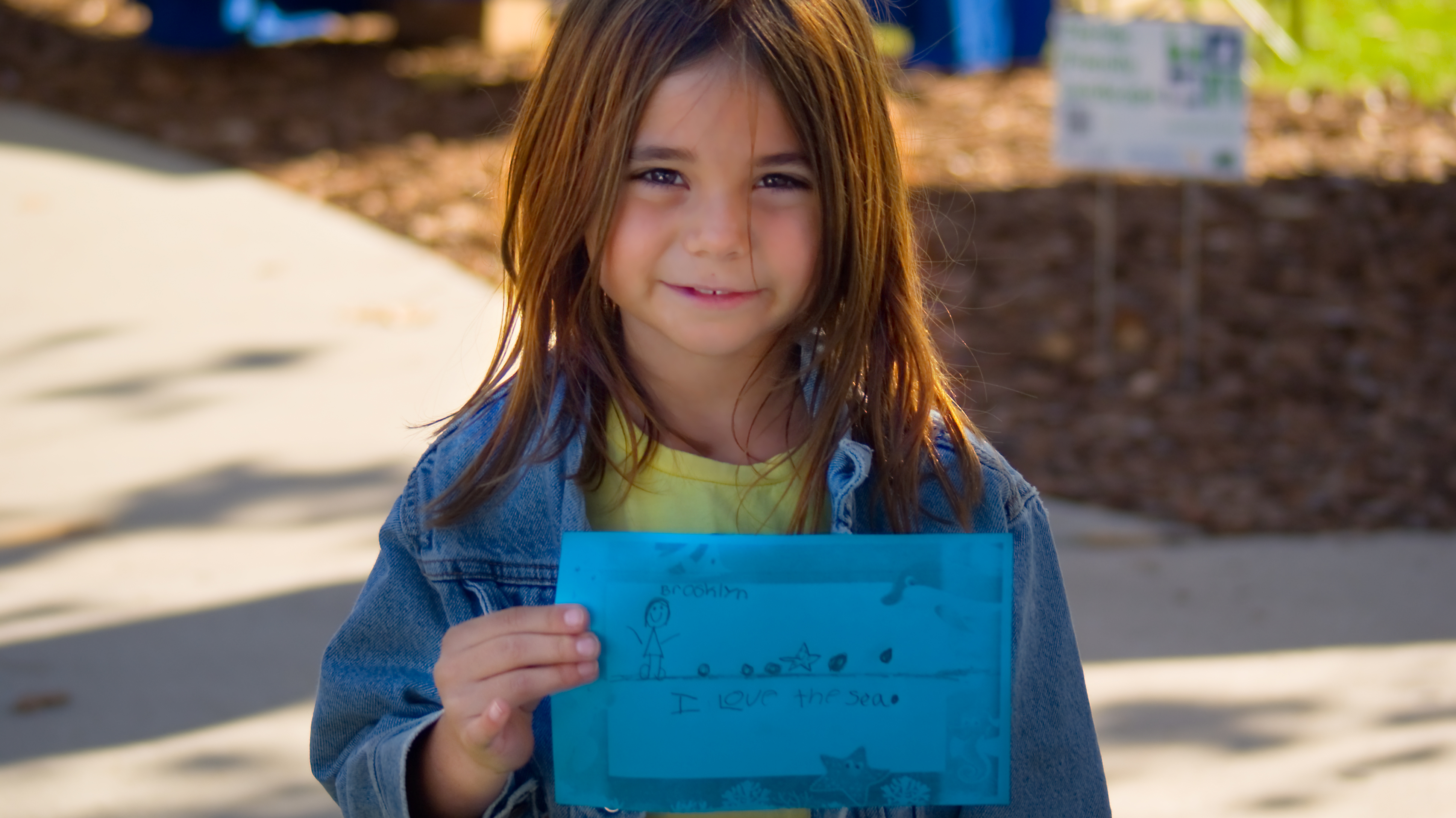
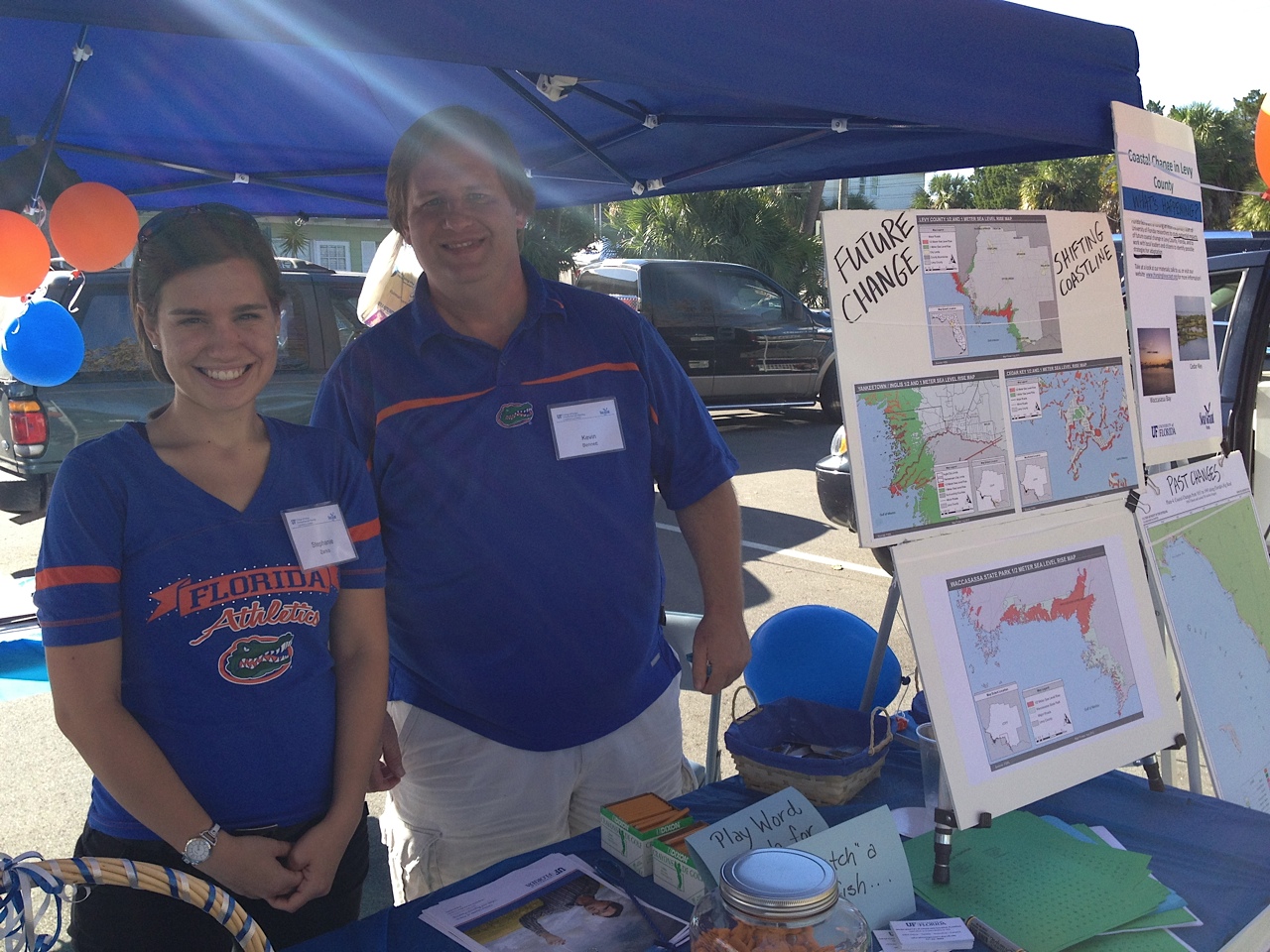
The 43rd Annual Cedar Key Seafood Festival was held this past weekend and the UF studio had the privilege of staffing an educational booth to present the project to the public. The festival provided a great opportunity to meet face to face with Levy County residents to discuss the impacts of sea level rise. Residents were able to view the sea level rise maps and ask questions about the projections. The booth also featured fun activities for the kids to get involved like writing letters to the sea and educational word searches. We would like to thank the city of Cedar Key for giving the studio the opportunity to participate in the festival. We would also like to thank the public that attended the festival for the engaging conversation and useful feedback.

Photos of our booth and materials are below.

Posted in Uncategorized | Leave a comment

Presentation to Florida’s Nature Coast Conservancy

On Thursday, October 11, 2012, students from the Civic Engagement for Coastal Resiliency Studio had the great privilege of presenting to the Florida’s Nature Coast Conservancy (FNCC) in Cedar Key.  They were able to discuss some of the impacts that coastal change could cause in the Waccasassa Natural Preserves located near the coast.  The presenters were Sean Reiss and Kevin Szatmary, two of the graduate students, who shared information concerning the certainty of coastal change and the impacts of sea level rise.  One of the major concerns for the Waccasassa conservation lands is habitat migration which, as the presenters pointed out can be hindered by development and can be adversely impacted by sea level rise. As sea level rises, it floods lower elevation lands, adversely affecting wildlife ecosystem and overall conservation land availability.  The suggestion was made to the FNCC to expand the area of conservation land acquisition in order to offset potential loss of conservation lands. Current maps show only the boundaries of single state ownership and do not reflect conservation easements placed on private properties surrounding the state owned lands.  Participants discussed possible strategies to adapt to coastal change and additional information that would be helpful in making decisions. Overall, the meeting was very successful.

Posted in Uncategorized | Leave a comment

Presentation to the Cedar Key Chamber of Commerce

On September 27, 2012, the Coastal Engagement Studio participants presented to the Cedar Key Chamber of Commerce at the Cedar Key Library. Doug McDuffie and Stephanie Zarkis presented past and current coastal changes, the potential impacts of future sea level rise, and the unique economic challenges that Cedar Key may face. The discussion following the presentation was highly engaging. Residents of Cedar Key discussed issues regarding infrastructure, conservation, and tourism. The studio participants gained many insights into local concerns for the island city of Cedar Key. Below is a 19-minute video of the presentation, and here are the slides.

Posted in Uncategorized | Leave a comment

Student Presentations

This semester, students participating in Urban and Regional Planning “studio” class were assigned with developing individual presentations related to coastal change in Levy County. The information was presented in front of the studio class to sharpen public speaking skills. All the students did an excellent job of researching and developing their material.  A few were closely related to the Levy County project so we decided to share them with you. URP student Kevin Szatmary, has a background in GIS and provided an overview the model that is used in the project to simulate storm surge, HAZUS. Kevin Bennett is a URP PhD student and gave a presentation on the coastal resiliency in Cedar Key. Check out his Powerpoint for some historical images of the city. URP student Sean Reiss, displayed an extensive knowledge of local habitats in coastal Levy County and the natural processes affecting the coast in his presentation. You can click on the links to view the presentations or visit the Library page.

Posted in Uncategorized | Leave a comment

City Commission Meetings

In mid September, Professor Kathryn Frank presented an overview of the project at the city commission meetings of Yankeetown, Inglis, and Cedar Key. We thank each city’s commissioners and mayor for the opportunity to share information about the project with them and the public, and to consider ways in which the project can be tailored to serve each community’s planning needs. The presentation slides are available here: Presentation to Inglis Town Commission.

Posted in Uncategorized | Leave a comment